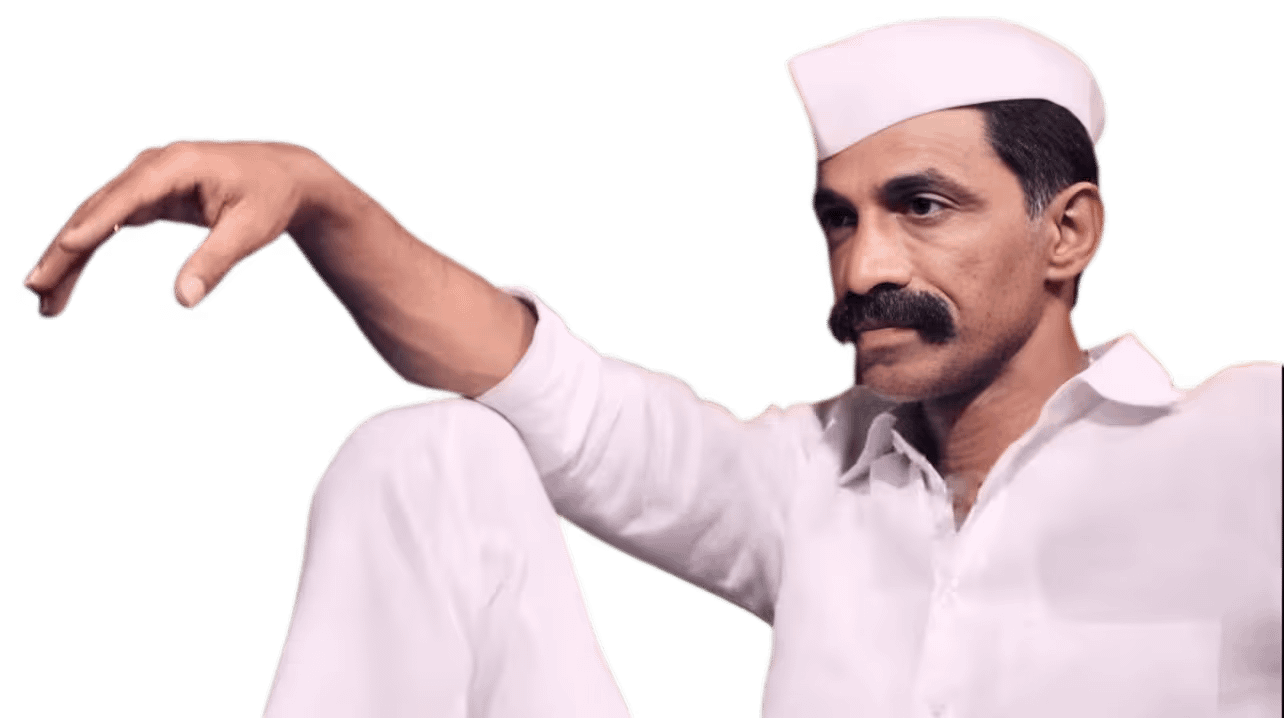
Arun Gawli: Former Member of the Maharashtra Assembly
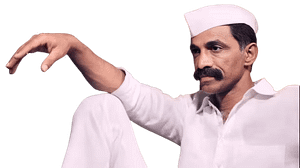
Arun Gawli Full Name Arun Gulab Gawli, a name that evokes a myriad of images—a feared underworld don, a shrewd politician, a messiah for the poor in his constituency, and a patriarch confined within the walls of his own making. His life is not just a biography; it is a dark, intricate tapestry woven into the very fabric of Mumbai’s history, reflecting the city’s tumultuous transition from Bombay to a global metropolis, and the deep, often invisible, connections between crime, politics, and society. This is the story of a man who became a legend, an anti-hero, and finally, an inmate, yet never lost his enigmatic aura.
Early Life and Education: The Forging of Resilience
Arun Gawli was born on February 12, 1955, in a small village in Pune district, Maharashtra. His family belonged to the Dhangar (shepherd) community, which falls under the Nomadic Tribes (NT) category in Maharashtra. Life in the village was fraught with poverty and hardship. Seeking a better future, his father, Gulab Gawli, moved the family to the dense, pulsating heart of Central Mumbai—Dagdi Chawl in Byculla.
Dagdi Chawl (which translates to “Stone Chawl”) was a typical Mumbai chawl—a low-income, multi-storied tenement housing dozens of families with shared corridors and common toilets. It was here, in these cramped, chaotic, and vibrant surroundings, that young Arun’s character was forged. The chawl was more than a residence; it was a microcosm of Mumbai’s working-class ethos, a world where survival often depended on street smarts, community bonds, and a fierce sense of territorial loyalty.
Gawli’s formal education was minimal and abruptly cut short. He studied only up to the 4th standard in a local Marathi-medium school. The pressing need to contribute to his family’s meager income overshadowed the pursuit of academics. He took up a job as a powerloom worker in a textile mill, earning a paltry wage. This was the era when Mumbai was still the proud “Manchester of India,” and the massive textile mills employed lakhs of workers like Gawli.
This period was crucial. It embedded in him a firsthand understanding of the struggles of the mill workers, the injustices of the system, and the power of collective identity—lessons he would later leverage masterfully in his political career. The closure of the mills in the historic Great Bombay Textile Strike of 1982 left thousands, including Gawli, unemployed and disillusioned, creating a fertile ground for alternative, often illicit, economies to flourish.
The Descent into the Underworld: The Making of “Daddy”
The vacuum created by the decline of the mill economy coincided with the rise of a new, violent underworld in Mumbai. The initial seeds were sown when Gawli, like many other young men from the chawls, fell in with local gangs involved in small-time crime. His initial entry into the world of crime is often attributed to his association with Baburao Hazare (not the anti-corruption activist) and the Bajirao Jedhe gang.
However, the defining relationship of his early criminal life was with Varadarajan Mudaliar, a Tamilian don who ruled the opium and illicit liquor trade in Kamathipura, Mumbai’s red-light district. Gawli started as a small-time enforcer for Mudaliar, but his ambition, sharp intellect, and ruthless efficiency quickly made him a prominent lieutenant.
The real transformation occurred with the arrival of Karim Lala (Pathan gang) and most significantly, Haji Mastan, who dominated gold smuggling. The Mumbai underworld was a complex ecosystem. But the dynamics shifted dramatically with the rise of Dawood Ibrahim, who started under Khalid Pehelwan before branching out on his own.
The Gawli-Dawood Ibrahim rivalry is the stuff of Mumbai’s gangland lore. Initially, they were allies, part of a loose coalition. However, personal ambition, ideological differences (Gawli was a Hindu Maharashtrian, Dawood a Muslim Konkani), and the immense profits from the burgeoning drug and extortion rackets turned them into bitter enemies. The split is often traced back to the aftermath of the 1984 Bhiwandi riots. Gawli accused Dawood’s men of attacking Hindus, a charge that added a communal color to their battle for supremacy.
This rivalry plunged Mumbai into a decade of terror in the 1980s and 1990s. It was a bloody war fought with automatic rifles, grenades, and car bombs on the city’s streets. Gawli earned the moniker “Daddy,” a term of respect and fear in the underworld. His base of operation remained the impregnable Dagdi Chawl, which he had fortified like a castle with armed guards, closed-circuit cameras, and a network of tunnels and escape routes. It was from here that he allegedly ran a vast empire of extortion (“hafta”), contract killings, and later, kidnappings.
The Mumbai Police, led by stalwarts like ACP Julio Ribeiro and later DCP Rakesh Maria, waged a relentless war against him. Gawli was arrested numerous times—over 50 cases were registered against him, including murder, extortion, and conspiracy. However, a lack of concrete evidence and witness intimidation often led to his acquittal. The most serious charge was the 1997 murder of Shiv Sena corporator Prem Sharma, which eventually became the case that finally stuck.
The Political Metamorphosis: The MLA from “Dagdi Chawl”
Perhaps the most fascinating chapter of Arun Gawli’s life is his transition into politics. He understood that political power was the ultimate shield against the law. In 1997, while still in prison, he formed his own political party, the Akhil Bharatiya Sena (ABS), a clear attempt to counter the Shiv Sena’s influence and carve out a political niche for himself based on Marathi pride and son-of-the-soil ideology.
His political strategy was simple yet brilliant. He portrayed himself as a Robin Hood figure—a benefactor of the poor and oppressed. From his base in Dagdi Chawl, he built a formidable welfare machine. His men would provide financial aid for weddings and medical emergencies, help with local issues, and ensure his name was synonymous with help and protection. This created an unwavering vote bank that saw him not as a criminal but as “Daddy,” their guardian.
In 2004, he achieved his ultimate goal. He contested the Maharashtra Assembly elections from the Chinchpokli (36-A) constituency, a area encompassing his beloved Byculla and Dagdi Chawl, and won. Arun Gawli, the alleged don, was now Honorable MLA Arun Gawli.
His tenure as a legislator was marked by a focus on local issues. He worked on improving water supply, roads, and infrastructure in his constituency. His attendance in the assembly was reportedly good, and he often raised concerns pertinent to his voters. However, his political career was constantly under the shadow of his criminal past. The opposition never let the public forget who he really was.
The law finally caught up with him during his political tenure. In 2012, after a long trial, a special MCOCA court convicted him and 11 others for the murder of Shiv Sena corporator Prem Sharma and sentenced him to life imprisonment. He was disqualified as an MLA. The Supreme Court later upheld the life term in 2019, ending any immediate hope of release. His political party, the ABS, continues to function but has largely been confined to his pocket borough, unable to expand beyond his personal charisma.
Personal Life: The Family Man in the Fortress
Behind the fearsome facade of “Daddy” was a deeply religious and family-oriented man. He married Asha Gawli in a simple ceremony, and the couple has three daughters: Geeta, Jyoti, and Sapna. In a world dominated by violence and betrayal, Gawli was known to be a devoted husband and father. He ensured his daughters received a good education, far removed from his world of crime. All three are now well-settled and married.
His family stood by him through his numerous arrests and legal battles. His wife, Asha, often managed his affairs when he was behind bars and was a prominent face during his political campaigns. The family continues to reside in Dagdi Chawl, which, though no longer the armed fortress it once was, remains a symbol of his legacy.
Gawli is a devout Hindu and a vegetarian. He is known to observe strict religious fasts and is a follower of the Shirdi Sai Baba. This dichotomy between his pious personal life and his violent professional life is a common trait among many Indian ganglords, adding another layer to his complex personality.
Social Media Handles and Public Image
Given that Arun Gawli has been in prison since his 2012 conviction, he does not maintain any personal social media handles. However, his political party, the Akhil Bharatiya Sena (ABS), has a presence online.
- Facebook: The party has a Facebook page (often under “Akhil Bharatiya Sena“) which posts updates, political messages, and occasionally, old photos or messages related to Gawli. The content is primarily in Marathi and targets their local support base.
- Twitter/Instagram: There is no verified, official Twitter or Instagram handle for either Arun Gawli or the ABS that holds significant credibility.
His public image remains sharply divided. To the outside world, he is a convicted criminal, a symbol of Mumbai’s dark, gangster-ridden past. But within the confines of his constituency, especially among the older generation in Byculla, he is still remembered for his accessibility and the social work he orchestrated. This duality is the cornerstone of his legend.
Net Worth: The Unquantifiable Fortune
Estimating the net worth of a figure like Arun Gawli is an exercise in speculation. His wealth, accumulated over decades through extortion, kidnapping ransoms, and other illicit activities, was never documented.
- Known Assets: His most tangible asset is the Dagdi Chawl property, which is prime real estate in Central Mumbai. The value of this property alone would run into millions of dollars. He also reportedly owned other properties and assets under benami (anonymous) names.
- Illicit Cash Flow: At the height of his power in the 1990s, his annual income from extortion alone was estimated by police officials to be in the hundreds of crores of rupees. This money was likely laundered through legitimate businesses, a common practice for gangsters seeking respectability.
- Current Status: His legal battles have been enormously expensive, involving high-profile lawyers and lasting for decades. Furthermore, with his incarceration and the breaking up of his crime syndicate, the steady flow of illicit income has undoubtedly dried up.
Therefore, while a specific figure like “$20 million” or “₹100 crore” is often bandied about in media reports, it is impossible to verify. His true net worth is a shadowy figure, much like the man himself—once vast and formidable, but now diminished and locked away.
Conclusion: The Legacy of the King of Dagdi Chawl
Arun Gawli’s life is a quintessential Mumbai story. It is a rags-to-riches narrative, but one stained with blood and built on fear. He emerged from the poverty of the chawls, leveraged the opportunities presented by a city in flux, and built an empire using a combination of ruthlessness and shrewd political acumen.
He was a product of his environment—a system that failed its working class, creating a vacuum that was filled by charismatic strongmen who offered protection and identity in exchange for loyalty. His transition into politics exposed the thin line between the underworld and the establishment in India, demonstrating how crime and politics can become symbiotic forces.
Today, as he serves his life sentence in prison, his story is a fading echo of a bygone era. The Mumbai underworld he once ruled has fragmented and globalized, moving from extortion to white-collar financial crimes and terrorism. Dagdi Chawl is no longer an impenetrable fortress.
Yet, the legend of Arun “Daddy” Gawli endures. He remains a complex cultural icon—a villain to the state, a hero to his constituents, a devoted family man, and a convicted murderer. His biography is not just the story of a man; it is a dark, mirror to the city of Mumbai itself, reflecting its ambitions, its injustices, and its endless capacity for myth-making.